Buying
Better
A practical, science-based guide to shopping smarter and choosing safer fabrics for you and your kids

What's
Ahead

From a busy mom and founder.

I run a kids' clothing brand, Jackalo. People ask me the same question all the time: what should I actually look for? Not the marketing version — the real one. What's actually better for my kid's skin? What's actually better for the planet?
This guide is my best shot at a straight answer. It has two core parts. The first is the shopping framework I use myself, every time, before I buy anything for my kids. The second is the fabric guide — what real research and lab studies say about environmental impact and health impact, fiber by fiber. Not oversimplified claims. Just the real picture, even when it's a little messy.
Get the printable guide (PDF) →Free — pop in your email and we'll send you the link.
xo,
Marianna
Chapter 1Buying Better
Before You Buy — 6-Step Framework
Before buying anything new for my kids or myself, I run through six questions. This framework has saved me money, closet space, and a lot of guilt — and it works whether you're shopping secondhand or buying new, from my brand or someone else's.
1. Do You Actually Need It?
This is the question people don't ask often enough, and it's the most important one. Before brand, before material, before price — do you actually need this item right now? Kids' wardrobes fill up fast, and a lot of that is just impulse, triggered by a sale or a cute print. Can your kid get through the next three months without it? If yes, wait.
To be able to answer this accurately, it's important to do a closet clean out. I love doing this with kids. It's a great opportunity to engage them in thinking about their wants and needs. It also helps them learn to articulate what they actually like to wear. One big part of overconsumption for families is buying things kids don't actually like. These items just sit in drawers and don't get worn. What a waste of money! By really talking with your kids about what they like, you'll be better able to buy items they'll actually wear.
2. Can You Get It Secondhand?
If you do need it, look secondhand first for everything but underwear and socks. The most sustainable garment is the one that already exists — it's already been grown, spun, sewn, and shipped, and that cost is already spent. Hand-me-downs, buy-nothing groups, resale sites, and neighborhood swaps should be your first stop, not your backup plan.
3. If Buying New, Does the Brand Reflect Your Values?
When secondhand isn't an option, think about the brand. Your values are yours to define. Mine center on:
- Ethical manufacturing — small factories with documented labor practices
- Environmental commitment — circularity, organic and natural fibers, carbon offsets, 1% for the Planet membership or B Corp certified
- Small, independent brands — supporting independent founders that clearly articulate their mission
Know your own list before you open a browser tab. If you don't know what you're looking for, you'll just buy whatever's in front of you.
4. How Will You Care for It to Make It Last?
The dryer is the biggest reason clothes wear out early. Heat breaks down fiber, weakens seams, and shrinks elastic. A few habits that add up over time: hang or line-dry, wash cold on a gentle cycle, treat stains right away, and when possible store clothes between wears instead of washing after every single use.
5. Will You Repair Before Replacing?
A hole is not the end. A worn knee is not the end. Repairing clothes is a habit worth building, and a skill worth teaching your kids — let them watch you fix something first, then hand them the needle and thread. Don't know how to mend? There are lots of videos online! A quick search will help you find tutorials on Youtube, Instagram, and Tiktok. And your local library may have a repair cafe or mending club. Our own Mending Guide Mending Guide is a great place to start.
6. How Will You Close the Loop?
There are lots of ways to close the loop. The goal here is to keep clothes out of the landfill. Sometimes that can be hard to do. Here are some of my favorites:
- Hand it down to a sibling, a friend, a neighbor's kid, or swap it.
- Sell it — send it back through a brand buyback program for store credit, post it on a resale site, or a local consignment shop.
- Donate it to a place that can actually put it to use. Look for smaller local organizations with a clear donate list first. After that, look at the bigger national donation organizations — some of the largest are also innovating on textile sorting and recycling. Find out how your local chapter handles the clothes it can't directly resell.
Chapter 2Buying Better
The Fabric Guide
This section looks at two separate questions for each fiber, because they don't always point the same direction.
First: environmental impact — how much water and energy it takes to make, what chemicals go into it, whether it breaks down naturally, and whether it sheds tiny bits of plastic called microplastic. Second: health impact — what real skin research says about rashes, allergies, and chemical exposure, especially for kids, since their skin is thinner and their bodies are still growing.
One important note before you read further: a "natural fiber" is not automatically gentler on skin. In many cases, the fiber itself is not the problem — the dyes, resins, and finishes added to it are. That difference matters more than most labels let on. Fibers are grouped below into natural fibers and synthetic or semi-synthetic fibers, since that's the divide that matters most for both the environmental and health questions.
Quick Reference
| Fiber | Environment snapshot | Skin / health snapshot | Watch for |
|---|---|---|---|
| — Natural Fibers — | |||
| Conventional cotton | Uses a lot of water and pesticide; grown on ~2.5% of farmland but uses ~10-22.5% of world insecticides | Fiber itself rarely irritates skin; risk comes from finishes, not the cotton | Pesticide residue; non-organic dyes and finishes |
| Organic cotton (GOTS) | Fewer chemicals used; water-savings claims are real but can be overstated and differ based on geography | Same low-irritation fiber as regular cotton, plus GOTS bans ~1,000 chemicals | Still uses real land and water — "organic" isn't zero-impact. Look for growing regions where the cotton can be rain-fed. |
| Recycled cotton | Keeps old fabric out of landfills; usually blended with new fiber for strength | Same as regular cotton | Check the blend % — pure recycled cotton is rare, unless it is upcycled without mechanical recycling. |
| Linen (flax) | Mostly rain-fed, low-pesticide, breaks down naturally; scores well in most studies | Rarely irritates skin in raw, undyed form, though it can feel itchy until broken in. | Chemical finishes and dyes can make it harder on skin. Look for azo-free dyes, or GOTS-certified dyes. |
| Wool | Breaks down naturally, no microplastic shedding, but sheep methane is a real climate cost | Merino is soft and gentle; coarser wool can feel itchy on sensitive skin. Dyes can also have an impact on skin. | Look for Responsible Wool Standard (RWS) for animal welfare |
| — Synthetic & Semi-Synthetic Fibers — | |||
| Regular polyester | Made from petroleum; doesn't break down naturally; sheds microplastic | For children with eczema and allergies, doctors often recommend avoiding polyester. Wearing it releases airborne microfiber kids can inhale or swallow. | Stays in landfills a very long time, some reports suggest over 200 years; higher mouthing/chewing risk for young kids |
| Recycled polyester (rPET) | Uses less new petroleum, but repeated studies found it sheds ~55% more microplastic than regular polyester | Same shedding/ingestion profile as regular polyester, with the same concerns for children with eczema and allergies. | Best suited to outerwear, backpacks, and gear — not everyday clothing worn close to skin |
| Nylon | Making it releases nitrous oxide, a gas ~300x more warming than CO2; energy-intensive | Low irritation from the fiber itself; sheds microfiber like polyester does | Sheds microplastic; doesn't break down naturally |
| Bamboo viscose | Bamboo grows fast, but turning it into fabric often uses harsh, poorly-contained chemicals | Low irritation once made, but depends on how well the factory manages its chemicals | "Bamboo" on a label without "lyocell" usually means viscose |
| Bamboo / tree lyocell (e.g. TENCEL) | Made in a closed system that captures and reuses ~99% of its chemicals — a cleaner process | Very low irritation; smooth fiber surface | Costs more; look for TENCEL or the word "lyocell" |

Fabric mantra:
Choose
natural first.
natural first.
Chapter 2Buying Better
Natural Fibers
Cotton — Conventional
Environment: Conventional cotton uses a lot of water and chemicals to grow. It's planted on only about 2.5% of the world's farmland. But estimates on insecticide and pesticide use vary widely. Estimates suggest it uses from 10–22.5% of the world's insecticides and 4.7–10% of its pesticides. One commonly cited figure is around 2,700 liters of water used per t-shirt, though this changes a lot depending on region and farming method.
Health: The cotton fiber itself rarely causes skin problems. A review of past studies found that raw, untreated cotton almost never causes an allergic rash on its own. The real risk comes from what's added to it afterward — see the Chemical Treatments section later in this guide.
Cotton — Organic (GOTS) & Regenerative
Environment: One well-known Textile Exchange study found organic cotton uses about 91% less irrigation water than regular cotton, plus less energy and fewer emissions. That number needs context, though — it compared rain-fed organic farms to irrigated regular farms, and not all organic farms are rain-fed. A review of 20 cotton studies found organic cotton does better per acre of land farmed, but can do worse per pound of cotton actually produced, since organic farms often grow less per acre. Both things are true at once: organic cotton uses meaningfully fewer chemicals, but "91% less water" shouldn't be repeated as a simple, always-true fact. Rain-fed growing is more the rule in places like Sub-Saharan Africa and Brazil, and less the rule in places like Central Asia and Egypt, where cotton — organic or not — usually still needs irrigation.
Where organic certification is mostly about which inputs are banned (no synthetic pesticides, no GMO seed), regenerative farming is about outcomes — rebuilding soil health, increasing biodiversity, and pulling carbon into the ground over time, through practices like cover cropping and no-till farming. It's newer and much less standardized than organic. A few certifications exist — Regenerative Organic Certified (ROC) is the most established — but plenty of regenerative cotton is grown without any formal certification at all, and plenty of certified-organic farms don't necessarily follow regenerative practices either. The two labels answer different questions and aren't interchangeable: organic tells you what wasn't used, regenerative tells you whether the land was actually left better than it started.
Health: Same low-irritation fiber as regular cotton. GOTS certification also bans about 1,000 chemicals, including flame retardants, heavy metals, plasticizers, azo dyes, PFAS, and formaldehyde resins, in how the fabric gets finished — and that finishing step is where most real skin reactions start.
Sources: Textile Exchange; AllThings.Bio critique of the 91% water claim; 2025 systematic review of cotton LCAs, ScienceDirect; GOTS chemical restrictions
Cotton — Recycled
Environment: "Recycled cotton" usually means mechanically recycled cotton — old fabric shredded back down into fiber, then respun. That process makes the fibers shorter and weaker, so mechanically recycled cotton is almost always blended with new cotton or another fiber for strength.
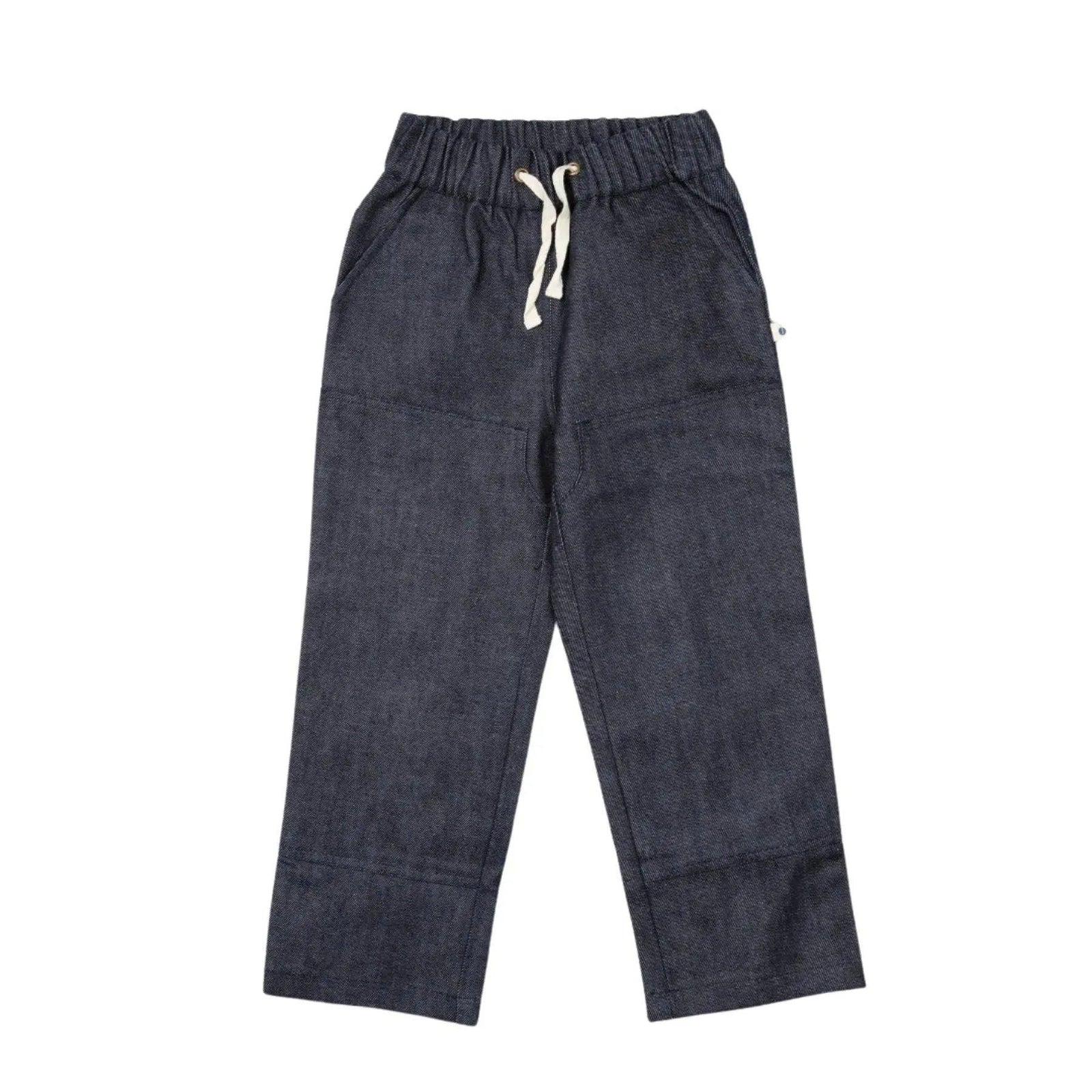
There's an important exception: upcycled cotton, like the denim in Jackalo's Broken In collection. Upcycled fabric is cut down from existing garments rather than shredded and respun, so there's no mechanical recycling step at all — which means an even lower energy footprint than standard recycled cotton.
Health: No real difference from regular cotton at the fiber level for mechanically recycled cotton — the same notes about finishing chemicals apply. For upcycled fabric specifically, the main thing to know is whether the original garment was treated with anything, since any residue from an old finish or coating can carry over.
Linen (Flax)
Environment: Flax, the plant linen comes from, mostly grows on rainwater and needs very little irrigation or pesticide. It scores well in most environmental studies. A group called the Alliance for European Flax-Linen & Hemp publishes independent study data showing low water use and low water pollution from flax farming, though it does use more land than some synthetic fibers. Linen breaks down naturally when it's dyed with organic dyes (e.g. GOTS) and unfinished.
Health: Raw, unfinished linen — like raw cotton — almost never causes an allergic rash. Chemical dyes and finishes can bring back the same risks found in other dyed or finished fabrics.

Wool
Environment: Wool is renewable, breaks down naturally, and doesn't shed microplastic — a real advantage over synthetic fabric. But raising sheep produces methane, a greenhouse gas, and that's a real cost that often gets left out of "natural fiber" marketing. One advocacy report found that leather, wool, and cashmere together cause about 75% of fashion's methane emissions, despite making up less than 4% of all the material fashion uses. Separately, the wool industry's own trade group reports that methane from sheep farms makes up about half of a wool garment's total climate impact. Aside from environmental issues, there are animal welfare issues with wool. Given this additional factor, looking for recycled or ethical wool production is very important. The Responsible Wool Standard and the ZQ Standard are the two most well-known certifications.
Health: Coarser wool can feel genuinely itchy on sensitive skin. That's a texture issue, not an allergy. Fine merino wool is much softer and is usually well tolerated, including by kids.
Sources: Collective Fashion Justice methane report, via Trellis; International Wool Textile Organisation environmental data

Chapter 2Buying Better
Synthetic & Semi-Synthetic Fibers
Polyester — Regular
Environment: Polyester is made from petroleum and doesn't break down naturally. It also sheds tiny plastic fibers, called microfibers, both in wear and every time it's washed.
Health: True allergic reactions to synthetic fibers like polyester are rare. Independent dermatology reviews consistently find that textile fibers themselves are rarely the cause of contact dermatitis — reactions come from the dyes, resins, and finishing chemicals added during manufacturing, not the fiber itself.
Sources: Textile Contact Dermatitis — Current Treatment Options in Allergy (Springer, 2019); DermNet NZ — Textile contact dermatitis; Allergies caused by textiles — ScienceDirect (2022)
Polyester Ingestion and Inhalation
Skin contact isn't the only health question with synthetic fabric. Synthetic fiber also sheds into the air and household dust — and once shed, it can be inhaled or swallowed. This applies to polyester here, but the same issue applies to nylon and recycled polyester too.
A 2020 study found that simply wearing polyester clothing releases more microfiber into the air than washing it does — up to 400 fiber pieces per gram of fabric in just 20 minutes of normal movement. This matters more for kids than adults, since children mouth and chew far more often; one study found kids under four can mouth an object up to 50 times an hour, and a 2021 study on infant and adult stool found infants carry noticeably more plastic, pointing to mouthing behavior — including chewing on synthetic fabric — as a likely source.
Once inside the body, these particles don't necessarily just pass through. Recent research has found plastic particles in adults in the placenta, in heart tissue removed during surgery, and in plaque removed from neck arteries — one 2024 study linked plastic in artery plaque to a roughly fourfold higher risk of heart attack, stroke, or death, though a formal response in the same journal raised fair questions about possible contamination during the surgery itself. This is new, unsettled research, not a proven cause-and-effect story — but it's a real and separate risk category from ordinary skin contact. It may be a bigger consideration for younger kids specifically, as there is much more polyester in children's clothing now than when today's adults were infants and small children.
Sources: University of Plymouth: wearing vs. washing study; Infant/adult stool study, via ScienceDaily; Placenta study, via ScienceAlert; Heart tissue study, via ACS; Marfella et al., New England Journal of Medicine (2024); NEJM correspondence on contamination concerns
Polyester — Recycled (rPET)
Environment: Recycled polyester uses less new petroleum and keeps plastic out of landfills — a genuine benefit. But multiple independent studies have found it sheds more microplastic than regular polyester, not less, likely because the recycling process leaves fibers shorter and weaker.
Health: Same as regular polyester — the ingestion note above applies here too.
Where it actually makes sense: given the shedding research, recycled polyester is a better fit for things that aren't washed often and don't sit against skin — outerwear shells, backpacks, and similar gear — than for everyday clothing worn close to the body and laundered frequently.
Sources: Changing Markets Foundation, "Spinning Greenwash" (2025); Overview of the shedding research, including the Microfibre Consortium counterpoint
Nylon
Environment: Nylon is a synthetic fabric made from petroleum — essentially a type of plastic, like polyester. Nylon is known for being strong, stretchy, and quick-drying. That's why it's used in things like swimwear, leggings, tights, and rain jackets. Making nylon takes a lot of energy, and the chemical process involved releases nitrous oxide, a greenhouse gas roughly 300 times more warming than CO2, according to EPA data. Like polyester, nylon doesn't break down naturally, and it sheds microplastic too.
Health: Nylon itself is not very irritating, but the bigger health concern in kids' nylon outerwear is usually the water-repellent or stain-resistant coating added to it, not the nylon — see PFAS below. Nylon also sheds microfiber like polyester does, so the ingestion note above applies here too.
Sources: US EPA, Nitrous Oxide Emissions data
Bamboo — Viscose vs. Lyocell
Bamboo, while a natural plant, is in this category because the process to transform it from a hard, durable plant into a soft, comfortable fiber requires a lot of energy and chemicals. Bamboo itself grows fast and needs few resources. But "bamboo fabric" can be made two very different ways:
- Bamboo viscose (most bamboo clothing you'll find) dissolves bamboo pulp using harsh chemicals — carbon disulfide and sodium hydroxide — in a process that isn't fully sealed off. Independent investigations have found carbon disulfide pollution near some viscose factories at over 100 times the World Health Organization's safety guideline, and this chemical has been linked to serious health problems in factory workers.
- Bamboo lyocell (sometimes sold under brand names like TENCEL) uses a gentler chemical in a closed system that captures and reuses over 99% of it, largely avoiding this pollution problem. It's a meaningfully cleaner process.
Health: The finished fabric is low-irritation either way once it's made. But a label that just says "100% bamboo," without the word "lyocell," almost always means viscose — and may not tell you which process was used.

Chapter 3Buying Better
Certifications Worth Knowing
Certifications answer different questions. Knowing which question each one answers is more useful than treating them as the same thing.
GOTS (Global Organic Textile Standard)
Answers the question: "Was this made responsibly, from start to finish?" It requires at least 70% certified organic natural fiber (95% if the label says "organic"), and it covers the whole supply chain — farming, wastewater treatment, chemicals, and labor conditions. It bans over 1,000 substances, including azo dyes and formaldehyde. It does not apply to synthetic fiber.
OEKO-TEX Standard 100
Answers the question: "Is this specific, finished item safe against my kid's skin?" It tests the finished product — fabric, thread, buttons, zippers, prints — against 100 or more regulated substances, including formaldehyde, heavy metals, and dyes known to cause allergies. It works for any fiber type, including synthetics, but it says nothing about farming or labor conditions. Class I is the strictest level, used for baby and toddler products.
The Real-World Limits of Certification
These certifications matter, but they have real limits worth knowing — including for a brand like ours.
GOTS certification requires a documented chain of custody through every processing step, from the organic farm all the way to the finished, labeled garment. Very few cut-and-sew factories in the U.S. currently hold GOTS certification. That means a garment can be made from fully GOTS-certified organic cotton fabric and still not carry a GOTS label on the finished piece, simply because the factory that cut and sewed it isn't part of a certified chain — not because anything about the fabric itself changed.
Deadstock fabric runs into the same wall. Deadstock — fabric left over from other brands' production — usually can't be GOTS certified either, even when it started out as certified organic cotton. There's no fixed time limit on GOTS certification itself — but factories have to keep continuous, verifiable inventory records tying fabric back to its certified origin for as long as it sits before being cut and sewn. If that paper trail lapses (inventory isn't properly logged, tracked, or reported to the certifier), the fabric can lose its certified status — not because too much time passed, but because the documentation gap breaks the chain of custody. Additionally, deadstock fabric resellers often don't carry certification, so moving to one of these facilities causes the chain of documentation to break.
None of this means an uncertified garment is less safe or less thoughtfully made. It means a missing certification logo doesn't always tell you what you'd assume it tells you — sometimes it's just a reflection of how the certification's paperwork works, not what's actually in the fabric.
Chapter 4Buying Better
Chemical Treatments to Watch For

This section matters most for kids specifically. Their skin is thinner than an adult's, they have more skin per pound of body weight, and their bodies are still developing.
PFAS (Forever Chemicals)
PFAS chemicals are used to make fabric waterproof, stain-resistant, or wrinkle-free. People call them "forever chemicals" because they barely break down in the environment. A 2022 study tested children's clothing across North America and found a PFAS marker in 65% of the samples tested. The highest levels showed up in school uniforms — including uniforms labeled 100% cotton, since the cotton itself isn't the source; the PFAS comes from a coating or finish added on top. An estimated 20–25% of U.S. schoolkids wear uniforms, which means millions of kids could be exposed for eight or more hours a day. A separate 2024 study across 13 countries found PFAS in 64% of tested kids' coats and swimwear. Research links PFAS exposure in kids to a weaker immune system, higher rates of asthma and obesity, and effects on development.
California and New York have passed laws against using PFAS in children's clothes, so it's likely that the landscape on this will change quickly.
What to look for: clothes clearly marketed as PFAS-free. Be cautious of any "stain-resistant," "wrinkle-free," or "water-repellent" claim on everyday kids' clothing.
Sources: Notre Dame study coverage; Consumer Reports coverage; International PFAS-in-childrenswear study, CHEM Trust (2024)
Formaldehyde Resins
Formaldehyde resins have been used since the 1920s to keep fabric from wrinkling, sometimes called "permanent press." Research going back decades has found that allergic rashes from these resins are more common than most people realize. They often show up as a rash where clothing rubs against skin, like along the legs from pants fabric. At much higher exposure levels than clothing — mostly from breathing it in over time in settings like a factory — formaldehyde is also classified as cancer-causing. Wearing treated clothing is a different, lower, and separately well-documented kind of risk: it's the best-known cause of clothing-related skin rashes.
What to look for: avoid "wrinkle-free," "easy-care," or "no-iron" labels on kids' clothing when you can. Both GOTS and OEKO-TEX limit formaldehyde in certified products.
Azo Dyes
Azo dyes are the most common known cause of clothing-related skin rashes worldwide, according to dermatology research. Some azo dyes break down into chemicals that are linked to skin reactions and, in some cases, cancer risk. That's why the European Union restricts specific azo dyes.
What to look for: GOTS certification bans azo dyes that release cancer-linked chemicals.
Flame Retardants
U.S. rules require children's sleepwear above size 9 months to either resist catching fire on its own or be treated with chemicals that do. Snug-fitting sleepwear is exempt from this rule completely, since tight-fitting clothes are already less likely to catch fire. That's why you'll often find that 100% cotton pajamas run quite small — they're intentionally tight.
A group of flame retardant chemicals called PBDEs was phased out after research linked them to harm in children's brain development. Their replacements, a different chemical group called organophosphate esters (OPFRs), are now being studied for similar concerns, including effects on hormones and development. Most of the strongest research on flame retardants comes from other baby products, like changing pads, mattresses, and nursing pillows, rather than clothing specifically — but the same chemical families show up in some children's sleepwear too.
What to look for: snug-fitting sleepwear made from natural fiber, since it's exempt from needing chemical flame-retardant treatment. Loose-fitting synthetic sleepwear is the category most likely to be treated with these chemicals.
Chapter 5Buying Better
The Cheat Sheet
If you remember nothing else from this guide:
Before You Buy
- Do you need it?
- Can you get it secondhand?
- Does the brand match your values?
- How will you care for it?
- Will you repair before replacing?
- How will you close the loop when you're done?
On Fabric
Natural fibers (cotton, linen, wool) don't rely on non-renewable resources, biodegrade, and rarely cause skin problems on their own — the dyes and finishes are usually the real issue, so skip "stain-resistant," "wrinkle-free," and "water-repellent" claims on everyday kidswear when you can.
Truly synthetic fibers (polyester, nylon) are a different story: they're made from petroleum, don't break down naturally, and shed microplastic just from being worn — not only from washing. "Recycled polyester" isn't an automatic win here either, since the shedding research shows it can shed more than regular polyester, not less.
Semi-synthetic fibers (bamboo viscose and lyocell) are a middle case — plant-based and biodegradable, unlike true plastics, but viscose processing can pollute heavily unless it's done in a closed loop. "Bamboo" without the word "lyocell" almost always means the more polluting viscose process.
Either way: look for GOTS and OEKO-TEX Standard 100 certification to help evaluate product safety.


Find your perfect pants
TAKE THE QUIZ
A few quick questions to point you in the right direction. Plus, get $10 off your next order.
Shop Our Best Sellers
Meet the styles families love most. Our best-selling kids’ clothes are crafted from organic, sustainable fabrics and built to last through countless adventures—then passed on through our TradeUp program.